Padel Glossary
Bandeja, vibora, chiquita: every padel term explained in plain language. Search or browse by category.
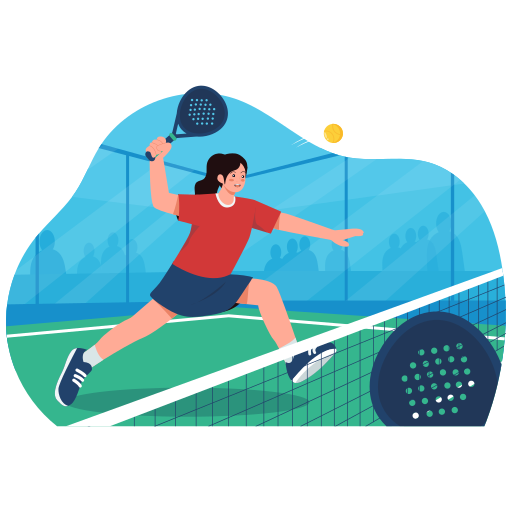
Bandeja
ShotsA controlled overhead hit with slice, played from around the service line. The goal is not to win the point outright but to keep the net position while the lob comes down. The name means tray in Spanish, from the open racket face.
Vibora
ShotsA more aggressive cousin of the bandeja, hit with side spin and more pace, usually aimed at the fence side or the opponent's body. The snake-like curve after the bounce gives it its name.
Remate
ShotsThe full smash. Hit with power either flat into the ground for a high bounce over the back glass, or at the fence for a winner.
Bajada
ShotsAn attacking shot played off a ball that has bounced high off your own back wall. You hit down on it while moving forward, often turning defense into attack.
Chiquita
ShotsA soft, low shot aimed at the feet of the players at the net. It forces an awkward low volley and buys your team time to move forward.
Globo
ShotsThe lob. The most important shot in padel. A good globo pushes opponents off the net and lets your team take it.
Dejada
ShotsThe drop shot. A delicate touch that dies just over the net, most effective when your opponents are stuck deep near the back glass.
Rulo
ShotsAn overhead hit with topspin instead of slice, driving the ball forward so it kicks off the back glass and stays low or squirts sideways.
Gancho
ShotsA hook-like overhead played when the lob is almost past you, hit with a bent arm behind your head. A rescue shot to keep the net.
Contrapared
ShotsA defensive escape where you deliberately hit the ball against your own back glass so it rebounds over the net. Spectacular when it works.
Salida de pared
ShotsPlaying the ball after it comes off the glass. The fundamental defensive skill in padel: let it pass, turn, and hit on the rebound.
Volea
ShotsThe volley. Padel volleys are usually blocked or punched with slice rather than swung, keeping the ball low and controlled.
Bloqueo
ShotsA block volley against a hard drive. Little to no swing, using the incoming pace to place the ball deep.
Pala
Court & gearThe padel racket. Solid with a perforated hitting surface, no strings. Shapes range from round (control) to diamond (power).
Cristal
Court & gearThe glass walls of the court. The ball can be played after it bounces off the glass, which is what makes padel rallies so long.
Reja
Court & gearThe metal mesh sections of the court walls. Balls rebound unpredictably off the reja, so shots aimed at it are hard to return.
Court turf
Court & gearThe artificial grass surface of a padel court, usually with sand infill. It slows the ball slightly and defines how much shots grip and skid.
Left side (reves)
TacticsThe side usually played by the stronger, more attacking player in a right-handed pair. Most smashes and winners come from here.
Right side (drive)
TacticsThe side of consistency and control in a right-handed pair. The right-side player sets up points and keeps the ball safe.
Net position
TacticsThe winning zone in padel. The pair that controls the net wins most points, which is why lobs and chiquitas matter so much.
No man's land
TacticsThe middle zone between the net and the back glass. Standing here leaves you exposed to balls at your feet; pass through it, don't live in it.
Cambio
TacticsA mid-point side switch, usually after a desperate defensive lob pulls one player across. Communication keeps the court covered.
Golden point
Scoring & formatsAt deuce (40-40), a single deciding point instead of advantage. The receiving pair chooses which side receives. Standard in professional padel since 2020.
Americano
Scoring & formatsA social tournament format where partners rotate every round, everyone plays with and against everyone, and individual points decide the winner.
Mexicano
Scoring & formatsLike an Americano, but pairings are based on the standings after each round: leaders play leaders, so matches get tighter as the event goes on.
Pozo
Scoring & formatsKing of the court. Winners move up one court, losers move down, partners often switch on each move. Chaotic and brilliant for groups.
Tie-break
Scoring & formatsPlayed at 6-6 in a set, first to 7 points with a 2-point margin. Serves alternate every two points after the first.
Walkover (W.O.)
Scoring & formatsA win awarded when the opposing pair does not show up. The most painful way to spend a court booking.
28 terms shown